How to Fairly Divide Song Royalties Among Collaborators
Understanding how to fairly divide song royalties among all collaborators is essential for independent artists and their teams. Learn how to approach this

Creating music is often a collaborative effort. Multiple talented people contribute their skills and vision to bring a song to life. When that song earns money, everyone involved deserves their fair share. Deciding what “fair” means can feel complex, but with clear communication and a good understanding of how royalties work, you can ensure every contributor is acknowledged and compensated accurately.
What are “splits”?
“Splits” refer to the percentages of ownership and income assigned to each person who contributed to a piece of music. There are two main types of royalties to consider, each with its own set of splits:
- Publishing Royalties (Composition): These are earnings from the song’s underlying musical work itself – the melody, lyrics, and composition. This income is generated when the song is performed publicly (radio, TV, live shows), streamed, downloaded, or used in films, commercials, or games (sync licensing). Songwriters, composers, and lyricists typically share in these royalties.
- Master Royalties (Sound Recording): These are earnings from the specific recorded version of the song. This income comes from streams, downloads, physical sales, and sync licensing of the master recording. Artists, producers, and sometimes labels share in these royalties.
It is important to understand that these two sets of royalties are distinct. A person’s contribution might earn them a share in one, or both.
Who gets a piece?
Many different roles contribute to a song. You need to consider anyone who made a creative or substantial contribution to the final work. This might include:
- Songwriter: Wrote the lyrics or composed the melody.
- Composer: Created the musical arrangement or core instrumental parts.
- Lyricist: Wrote the words.
- Beatmaker/Producer: Created the instrumental track or significantly shaped the sound of the recording. Producers sometimes receive a percentage of the master royalties, often called “producer points,” in addition to any upfront fees.
- Featured Artist: Performed a prominent vocal or instrumental part on the track.
Everyone who helped create the song’s identity should be part of the conversation.
The 100% Rule
For both publishing and master royalties, the total share for each category must always add up to exactly 100%. You cannot have 110% of a song, nor can you have 90%. Every percentage point must be assigned. This ensures that all potential income streams have a clear owner and can be paid out correctly.
Starting the conversation
The best time to discuss splits is at the beginning of a project, before recording is complete or the song is released. Open and honest communication upfront prevents misunderstandings and disputes later. Have a calm discussion with all collaborators about their expectations and contributions.
Factors to consider for a fair split
Deciding on percentages requires an honest assessment of each person’s input. Here are some factors to weigh:
- Creative Contribution: Who came up with the core melody, the memorable hook, or the impactful lyrics? Who wrote the main instrumental riff? This is often the most significant factor for publishing splits.
- Time and Effort: How much time did each person dedicate to writing, arranging, or producing the track? Was someone responsible for overseeing the entire creative process?
- Intellectual Property: Did someone bring a pre-existing beat, a unique sample, or a foundational concept to the table? If a sample is used, ensure you have cleared its use and accounted for its owner’s share.
- Financial Investment (Producer Points): While studio costs and session musician fees are typically paid expenses, some producers negotiate “points” – a percentage of the master recording income – in exchange for their creative input and sometimes for reduced upfront fees. This is separate from their share as a songwriter if they also contributed creatively to the composition.
There is no single formula for every song. A 50/50 split might be fair for two co-writers, but a song with a lyricist, a composer, and a beatmaker will likely have different proportions.
Documenting the agreement: The Split Sheet
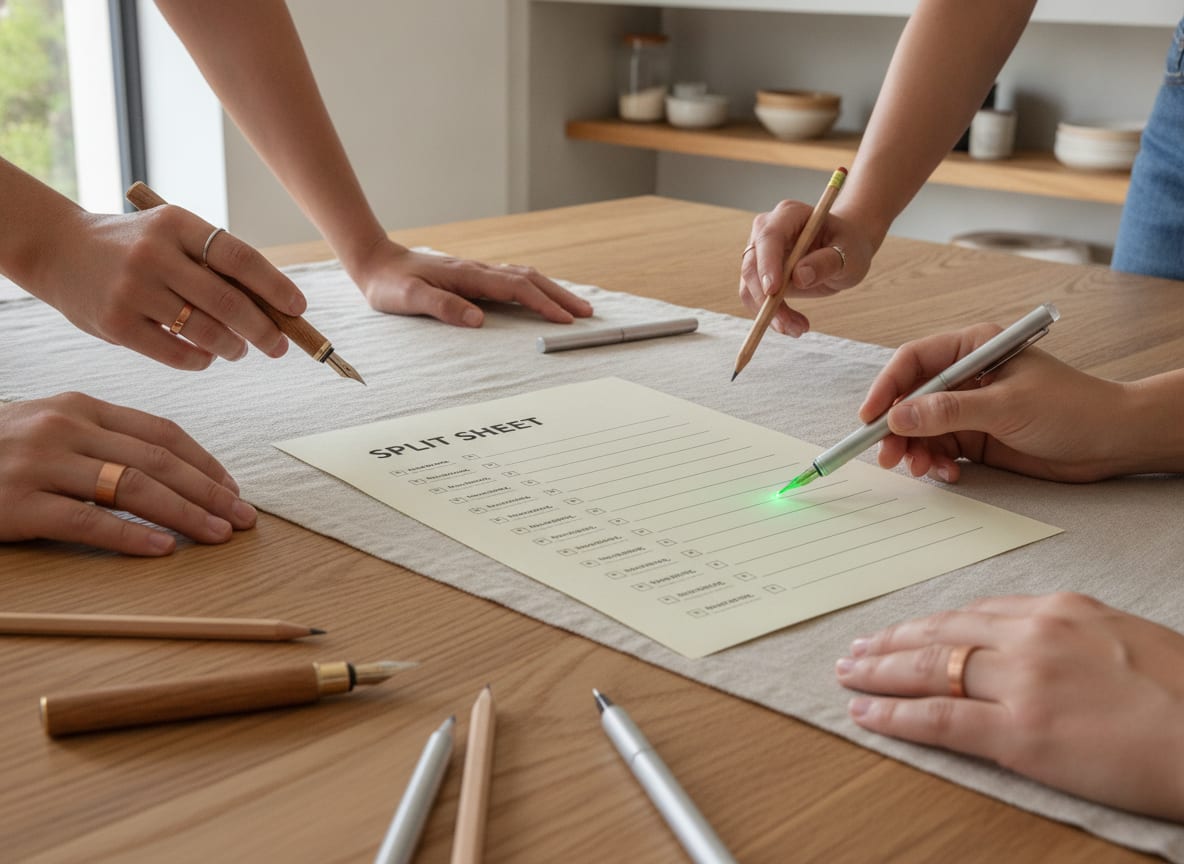
Once everyone agrees, document the percentages in a split sheet. A split sheet is a simple, written agreement outlining who contributed what and their agreed-upon shares. It is not legal advice, but it is a vital record of your understanding with your collaborators.
Your split sheet should include:
- The song title
- The ISRC (International Standard Recording Code – a unique identifier for your specific sound recording, like a digital fingerprint)
- The names and contact information of all contributors
- Each person’s role (e.g., songwriter, composer, producer, featured artist)
- Their agreed-upon percentage of publishing royalties
- Their agreed-upon percentage of master royalties
- Signatures of all parties involved
- The date the agreement was made
Distributors like LYVO rely on this information to ensure that royalties are paid out correctly. Without a clear split sheet, there can be delays or disputes over who owns what. Having this document ready before you release your music makes the distribution process smoother for everyone involved. How verification works for artists and their teams often involves confirming these details.
When things change
Sometimes, a song evolves, or a new collaborator joins late in the process. If significant changes occur that impact the initial contributions, revisit your split sheet. It is always better to amend an agreement with everyone’s consent than to proceed with an outdated one.
What to do next
Before releasing your next project, gather all collaborators and discuss their contributions and desired splits openly. Create a clear split sheet documenting all agreements for both publishing and master royalties, ensuring it adds up to 100% for each. Keep this document safe and accessible for future reference and for your distributor.
