AI-Generated Music Lacks Copyright Protection, Impacts Creator Revenue
Purely AI-generated music cannot be copyrighted, impacting human creators' revenue on streaming platforms as unprotectable content floods the market.

On October 16, 2026, Record of the Day highlighted the music industry’s ongoing “AI reckoning,” pointing to discussions about the implications of artificial intelligence. This development means that works generated entirely by AI systems do not qualify for copyright protection, directly affecting how human creators earn revenue from their music on streaming platforms.
This information is for general education and not legal advice. You should consult with an intellectual property lawyer for specific legal guidance.
The Legal Position on AI and Copyright
The legal framework is clear: copyright authorship requires a human creator across all major jurisdictions. This is the settled position of the U.S. Copyright Office, confirmed in Thaler v. Perlmutter (2023). European Union law, specifically Directive 2019/790 (DSM Directive), also reflects this requirement. According to Metida, an AI system, no matter how advanced, has no legal personality and cannot be an author [https://metida.com/ai-copyright-law/].
What this means in practice is that a work generated entirely by an AI system has no copyright owner. It enters the public domain immediately upon creation. This legal stance is currently in force based on existing U.S. and EU law.
The Impact on Streaming Revenue
The influx of AI-generated content on streaming platforms is creating a measurable economic harm for human creators. Royalties are often calculated based on the relative share of plays. When a large volume of uncopyrightable AI content is uploaded, it dilutes the overall royalty pool, reducing the earnings for legitimate human-created music.
Deezer’s 2025 creator study reported a significant trend. The study found that 75,000 songs are uploaded to their platform every day. Of these, 44% are AI-generated. This means that nearly half of the new music appearing on the platform is not made by humans, as stated in the study: “44% of music is not made by humans – what is actually happening on streaming platforms?” This volume of AI content directly impacts the revenue streams for artists, songwriters, and publishers who are human creators.
What This Means for You
As an independent artist, manager, or small label, this situation has direct and significant practical consequences. Firstly, if you use AI tools in your creative process, it is crucial to understand that purely AI-generated music cannot be copyrighted. This makes it impossible to protect or monetize such works through traditional copyright means.
Secondly, the sheer volume of uncopyrightable AI content flooding streaming platforms directly dilutes the royalty pool. This reduces the earnings for your human-created music. You need to actively protect your human-authored works and be aware of the diminishing returns from platforms saturated with AI. Understanding how copyright works, especially for your own original music, is important. You can learn more about how verification works for your releases [/how-it-works].
The economic impact on human creators due to diluted revenue streams from AI content on streaming platforms is an ongoing and current reality. You should be prepared to navigate this evolving landscape.
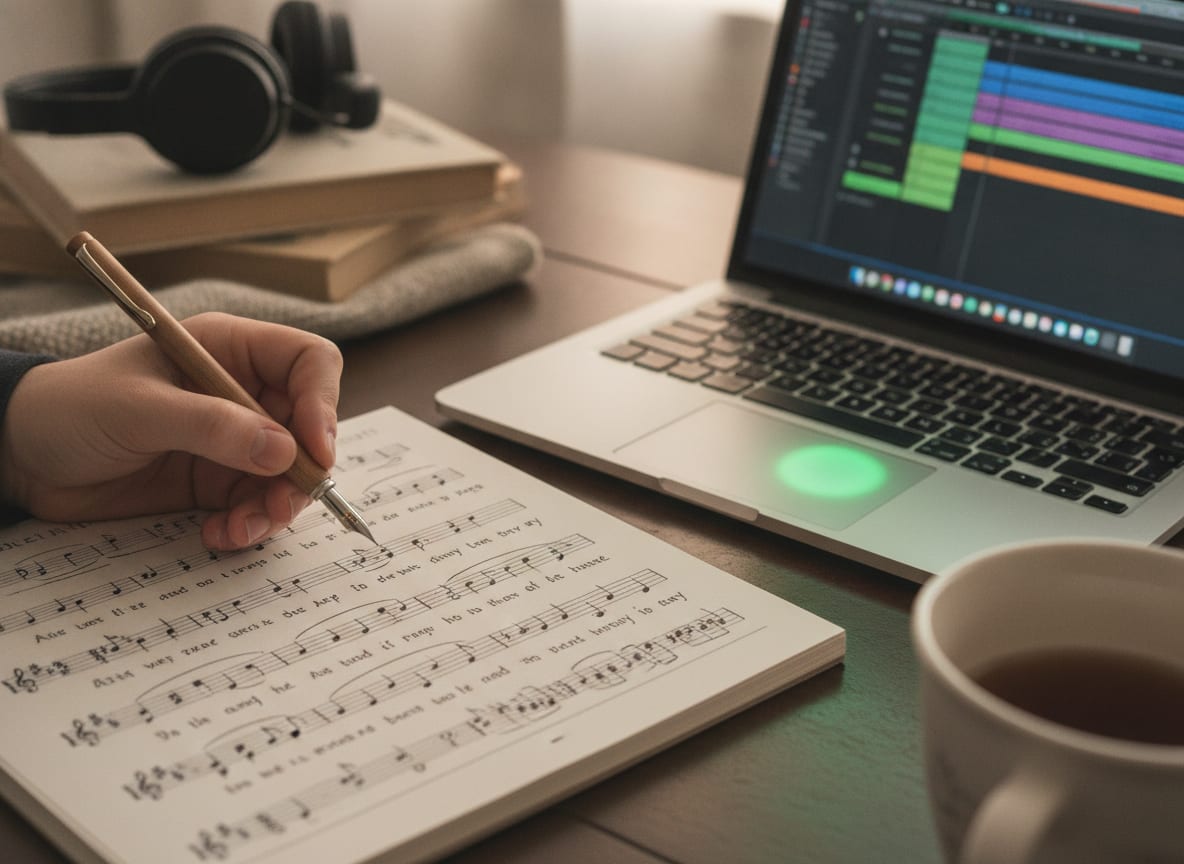
!A close-up of a hand holding a pen over a notebook with musical notes and lyrics, next to a laptop displaying a music production interface. A human hand writes lyrics in a notebook, emphasizing the human element in music creation.
What to do next
To protect your work, document your creative process thoroughly. Assert any opt-out rights offered by platforms or services regarding AI training on your music. Consider consulting an intellectual property lawyer to understand your specific rights and options.
